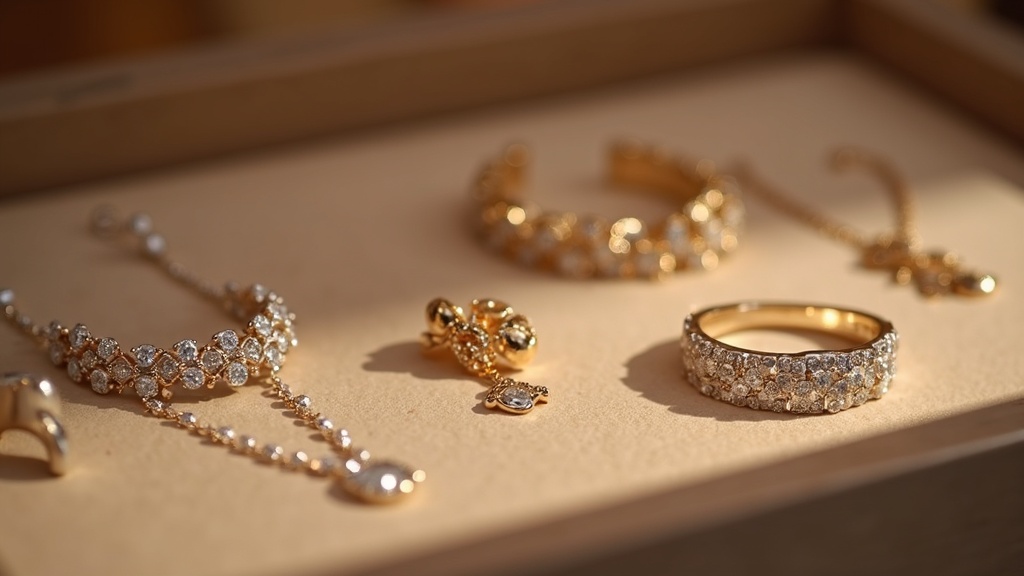
Professional Ecommerce Jewelry Store: Build Trust Online
A professional ecommerce jewelry store must balance visual appeal with operational trust to convert modern shoppers. With mobile commerce driving over 60 percent of online jewelry transactions, brands need mobile-first design, secure checkout, and authentic product presentation to succeed in 2026 (IceCartel Online Jewelry Market Analysis, 2025)[1].
Table of Contents
- Why a Professional Ecommerce Jewelry Store Needs a Mobile-First Foundation
- Building Trust Through Product Education and Visual Storytelling
- Personalization and Live Commerce as Competitive Differentiators
- Subscription Models and Ethical Branding for Long-Term Growth
- Frequently Asked Questions
- Comparison: Key Approaches for Your Jewelry Ecommerce Store
- Practical Tips for 2026
- Key Takeaways
- Useful Resources
A professional ecommerce jewelry store is an online retail platform that prioritizes mobile optimization, trust signals, and personalized shopping experiences. This article covers the five major trends reshaping jewelry ecommerce in 2026, from AI sales agents to subscription services, and offers actionable tips for building a successful online jewelry business.
- Smartphones generated 69% of global online shopping orders, underscoring the need for mobile-optimized jewelry stores (Statista via Coursera E‑Commerce Trends, 2025)[2].
- The jewelry subscription service market is predicted to grow at a 15.4% CAGR from 2026 to 2034 (Jewel360, 2026)[3].
- Five major forces are reshaping jewelry ecommerce in 2026: lab-grown diamonds, mainstream resale, AI sales agents, live video consultation, and discovery via short-form video and AI search (Immerss, 2026)[4].
Why a Professional Ecommerce Jewelry Store Needs a Mobile-First Foundation
A professional ecommerce jewelry store cannot succeed in 2026 without a mobile-first design. Mobile commerce already accounts for over 60 percent of online jewelry transactions, meaning most purchases are placed via smartphones (IceCartel Online Jewelry Market Analysis, 2025)[1]. Younger shoppers, particularly Gen Z and Millennials, are far more likely to browse and shop for jewelry on their mobile devices, so a professional ecommerce jewelry store must adopt a mobile-first UX and streamline checkout if it wants to convert these demographics (Whidegroup Digital Commerce Team, 2026)[5].
This shift goes beyond responsive design. A true mobile-first approach means touch-friendly navigation, fast loading times, thumb-friendly button placement, and simplified checkout flows that minimize friction. The global voice and speech recognition market, which underpins voice search–driven ecommerce discovery for products such as jewelry, is projected to reach 53.67 billion US dollars by 2030 (Grand View Research via Coursera E‑Commerce Trends, 2025)[2]. This suggests that voice search optimization will become a critical factor for jewelry stores looking to capture discovery traffic.
Retail analyst Jasmine Glasheen notes that jewelry shoppers are increasingly starting their journey on social platforms and marketplaces, but they still expect a professional ecommerce store where they can validate brand trust, see certification details, and complete the purchase securely (ParcelPro, 2026)[6]. A mobile-first storefront that loads quickly and presents clear product information is the baseline expectation for today’s jewelry buyer.
Key Mobile Optimization Tactics
Implement accelerated mobile pages (AMP) for product listings, use high-resolution but compressed images, and offer one-click payment options like Apple Pay and Google Pay. Test your store’s mobile performance regularly using tools like Google’s Mobile-Friendly Test. A seamless mobile experience is no longer optional; it is the primary sales channel for most jewelry ecommerce stores.
Building Trust Through Product Education and Visual Storytelling
Trust is the currency of a professional ecommerce jewelry store. Without the ability to touch or try on items, customers rely on detailed product education and visual storytelling to make purchase decisions. Céline Assimon, CEO of De Beers Jewellers, explains that for fine jewelry, an ecommerce store is no longer just a catalog; it is a high‑touch clienteling environment where brands replicate the boutique experience with virtual appointments, detailed education, and highly personalized recommendations (ParcelPro, 2026)[6].
High-quality product photography is essential, but video content is becoming equally important. Short-form video on platforms like TikTok and Instagram Reels drives discovery, while longer format videos on product pages can demonstrate scale, sparkle, and craftsmanship. The Immerss Research Team observes that the biggest shift in professional jewelry ecommerce is away from competing on product and toward competing on experience and trust, with live video consultations and AI sales agents acting like digital associates (Immerss, 2026)[4].
Trust signals also include clear return policies, third-party certifications (e.g., GIA for diamonds, hallmarking for precious metals), customer reviews with photos, and secure payment badges. A professional ecommerce jewelry store should prominently display these elements on product pages and during checkout. For a specialized example of trust-building through personalization, explore the curated selection at catkarmacreations.com, which demonstrates how niche focus and detailed product storytelling can create a loyal customer base.
Personalization and Live Commerce as Competitive Differentiators
Personalization is no longer a nice-to-have; it is a core expectation for a professional ecommerce jewelry store. AI-powered personalization engines can recommend products based on browsing history, past purchases, and even social media activity. The Immerss Research Team highlights that AI sales agents and live video consultation are two of the five major forces reshaping jewelry ecommerce in 2026 (Immerss, 2026)[4]. These tools allow stores to offer personalized recommendations at scale, replicating the in-store sales associate experience online.
Live commerce, where brands host live video streams to showcase products and answer questions in real time, is gaining traction in the jewelry sector. This format combines entertainment with education and allows customers to see products in natural light and movement. The Jewel360 Editorial Team notes that professional ecommerce jewelry stores that lean into subscription boxes, personalization, and direct‑to‑consumer selling are best positioned to capture the next wave of online jewelry growth (Jewel360, 2026)[3].
Augmented reality (AR) try-on experiences are another powerful personalization tool. Customers can virtually try on rings, necklaces, or earrings using their smartphone camera, reducing hesitation and return rates. AR and VR experiences are among the seven major ecommerce trend categories driving professional jewelry stores (Coursera E‑Commerce Trends, 2025)[2]. Implementing AR try-on can significantly boost conversion rates for high-consideration items like engagement rings and fine jewelry.
Subscription Models and Ethical Branding for Long-Term Growth
The jewelry subscription service market is predicted to grow at a compound annual growth rate of 15.4 percent from 2026 to 2034 (Jewel360, 2026)[3]. This model offers a predictable revenue stream and deepens customer loyalty. Subscription boxes can feature curated pieces, limited-edition designs, or personalized selections based on style quizzes. For a professional ecommerce jewelry store, this approach transforms one-time buyers into recurring customers.
Ethical branding is another powerful growth driver. Consumers, especially younger ones, are increasingly concerned about the environmental and social impact of their purchases. Key jewelry ecommerce marketing trends include sustainability and ethical sourcing, expert and micro-influencer partnerships, and AR try-on experiences (Brenton Way, 2026)[7]. A professional ecommerce jewelry store should transparently communicate its sourcing practices, use of recycled materials, and any certifications related to ethical labor or environmental standards.
Mid-range and affordable jewelry, including fashion jewelry and subscription models, make up the largest portion of online jewelry sales by units (IceCartel Online Jewelry Market Analysis, 2025)[1]. This segment is particularly well-suited for subscription models and direct-to-consumer selling. By combining ethical branding with subscription offerings, a professional ecommerce jewelry store can attract values-driven consumers while building a sustainable business model. For those looking to deepen their understanding of how AI can enhance customer experiences, consider exploring artificial intelligence and machine learning training to see how these technologies apply beyond the jewelry industry. Additionally, artificial intelligence training resources can help ecommerce teams implement AI-driven personalization tools effectively.
Important Questions About Professional Ecommerce Jewelry Store
What is a professional ecommerce jewelry store?
How do I start a professional ecommerce jewelry store?
Why is mobile optimization critical for a jewelry ecommerce store?
What are the top trends for professional ecommerce jewelry stores in 2026?
Comparison: Key Approaches for Your Jewelry Ecommerce Store
Choosing the right strategy for a professional ecommerce jewelry store depends on your target audience, product type, and business goals. The table below compares four common approaches to help you decide which path suits your brand.
| Approach | Best For | Key Investment | Customer Appeal |
|---|---|---|---|
| Mobile-First Storefront | All jewelry types | Responsive design, fast hosting | Convenience, speed |
| Personalization & AI | Fine jewelry, high-consideration items | AI software, data analytics | Tailored recommendations |
| Live Commerce & Video | Fashion jewelry, new collections | Streaming equipment, host training | Real-time engagement |
| Subscription Model | Mid-range, affordable jewelry | Inventory management, curation | Recurring discovery |
Practical Tips for 2026
Building a successful professional ecommerce jewelry store requires staying ahead of trends while maintaining operational excellence. Here are actionable tips for 2026:
- Invest in mobile-first design: Ensure your store loads in under three seconds on mobile devices. Use Google’s PageSpeed Insights to identify bottlenecks and compress images without sacrificing quality.
- Leverage AI for personalization: Implement AI-powered product recommendations and chatbots to guide customers through their purchase journey. Tools like Nosto or LimeSpot can increase average order value by up to 30 percent.
- Build trust with transparency: Display certifications, customer reviews, and clear return policies prominently. Consider adding a sustainability page that details your sourcing and ethical practices.
- Experiment with live commerce: Host weekly live streams on Instagram or your own site to showcase new arrivals, answer questions, and offer exclusive discounts. This builds community and drives conversions.
- Optimize for voice search: Include natural language phrases in your product descriptions to capture voice search queries. For example, use phrases like “gold necklace for wedding anniversary” instead of just “gold necklace.”
For more about Jewelry store maple ridge, see find jewelry store maple ridge resources.
Key Takeaways
A professional ecommerce jewelry store in 2026 must prioritize mobile-first design, trust-building through transparency, and personalized shopping experiences to stand out in a competitive market. The shift toward AI-powered personalization, live commerce, and subscription models offers new opportunities for growth, while ethical branding resonates with values-driven consumers. By focusing on customer experience and operational excellence, jewelry brands can thrive in the evolving digital landscape. To continue learning about ecommerce best practices and emerging technologies, explore the resources available on this site for artificial intelligence training and other relevant topics.
Useful Resources
- IceCartel Online Jewelry Market Analysis.
https://icecartel.com/blogs/news/online-jewelry-market-size - Coursera E‑Commerce Trends (citing Statista and Grand View Research).
https://www.coursera.org/articles/ecommerce-trends - Jewel360 – 8 Jewelry E‑Commerce Trends To Keep an Eye On in 2026.
https://jewel360.com/blog/jewelry-e-commerce-trends - Immerss – Jewelry Ecommerce Trends 2026.
https://www.immerss.live/content/jewelry-ecommerce-trends-2026/ - Whidegroup – Jewelry Ecommerce Trends: How to Adapt in 2026.
https://whidegroup.com/blog/jewelry-ecommerce-trends/ - ParcelPro – The Future of the Jewelry Industry: Trends & Insights.
https://www.parcelpro.com/us/en/resources/insights/the-future-of-the-jewelry-industry.html - Brenton Way – Jewelry Marketing Trends.
https://brentonway.com/blog/jewelry-marketing-trends


