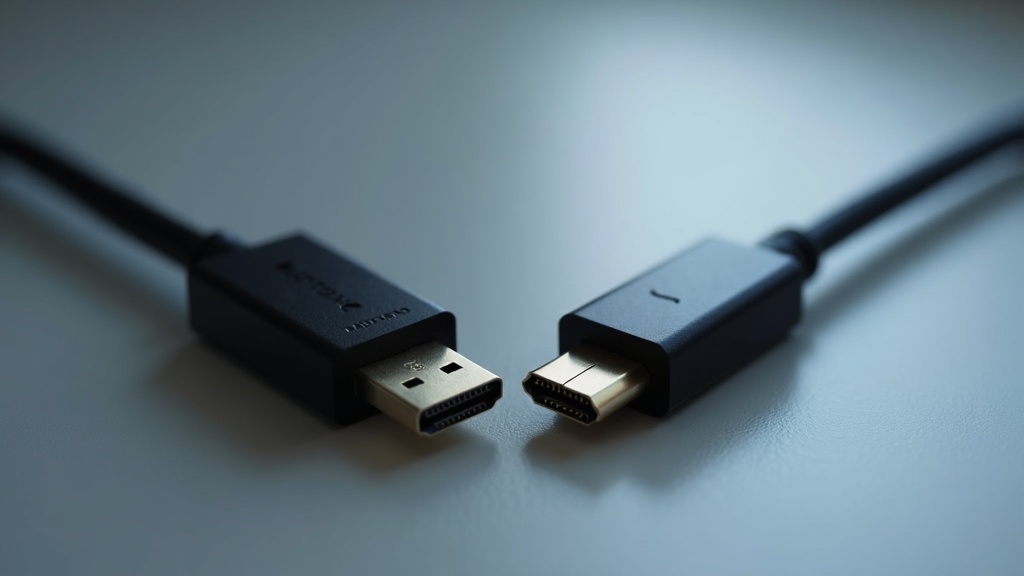
USB and HDMI Adapter Guide for Mining Operations
A USB and HDMI adapter connects modern USB-C devices to HDMI displays, a critical tool for mining operations that rely on rugged laptops and high-resolution monitoring screens. This guide covers the technology, market trends, selection criteria, and practical applications for backfill grouting environments.
Table of Contents
- What Is a USB and HDMI Adapter?
- Market Trends and Growth Projections
- Key Technical Specifications for Mining Environments
- Selecting the Right Adapter for Backfill Grouting Operations
- Frequently Asked Questions
- Comparison: USB-C to HDMI vs. Dedicated DisplayPort
- Practical Tips for Mining Sites
- Final Thoughts on USB and HDMI Adapter
- Useful Resources
A USB and HDMI adapter is a compact device that converts USB-C signals to HDMI output, enabling laptops and tablets to connect to monitors, projectors, and TVs. In mining and backfill grouting settings, these adapters bridge the gap between modern portable computers and industrial-grade display equipment, supporting real-time data monitoring and safety communications.
Quick Stats: USB and HDMI Adapter
- The global USB and HDMI cable market was valued at USD 15 billion in 2025, projected to reach USD 25 billion by 2033 (Data Insights Market, 2025)[1].
- The USB-C to HDMI adapter market is forecast to grow at a 4.2% CAGR from 2026 to 2035 (IndexBox, 2025)[2].
- The broader USB Type-C market, including USB-C to HDMI applications, is expected to surge from USD 4.66 billion in 2024 to USD 81.31 billion by 2037, a CAGR of 24.6% (Accio Business Insights, 2025)[3].
A USB and HDMI adapter has become an essential accessory in modern mining operations, where rugged laptops and tablets must connect to high-resolution monitors for real-time data analysis, grout monitoring, and safety communications. As the industry shifts toward USB-C as a universal port standard, understanding how to select and use these adapters in demanding environments is crucial for maintaining productivity and safety.
What Is a USB and HDMI Adapter?
A USB and HDMI adapter is a small electronic device that converts the digital signal from a USB-C port into an HDMI-compatible output. This allows laptops, tablets, and smartphones without native HDMI ports to connect to external displays such as monitors, projectors, and TVs. In mining environments, this capability is especially valuable because many modern rugged laptops prioritize USB-C connectivity over legacy video ports.
The adapter market has grown rapidly as manufacturers phase out older connectors. The global USB and HDMI cable market was valued at USD 15 billion in 2025 and is projected to reach USD 25 billion by 2033, reflecting a compound annual growth rate of 7% (Data Insights Market, 2025)[1]. This growth is driven by the proliferation of USB-C devices and the need to bridge them with existing HDMI infrastructure.
For mining operations, the adapter serves as a critical link between field laptops and control room displays. Engineers can monitor grout flow rates, slurry density, and pump pressures on large screens while their portable devices remain connected via a single USB-C cable. This setup reduces cable clutter and simplifies equipment setup in confined spaces like underground control rooms or mobile grouting units.
How It Works
The adapter contains a chipset that translates the USB-C’s DisplayPort Alternate Mode signal into HDMI format. Most modern adapters support resolutions up to 4K at 60Hz, which is sufficient for detailed monitoring of grouting parameters. The adapter does not require external power for standard operation, drawing power from the host device through the USB-C connection.
Market Trends and Growth Projections
The USB and HDMI adapter market is experiencing significant expansion, driven by the universal adoption of USB-C across consumer and industrial electronics. According to market analysts, the USB-C to HDMI adapter segment is projected to grow at a 4.2% CAGR from 2026 to 2035, with a market index reaching 145 points by 2035, based on a 2025 baseline of 100 (IndexBox, 2025)[2].
The broader USB Type-C market, which includes USB-C to HDMI applications, is expected to surge from USD 4.66 billion in 2024 to USD 81.31 billion by 2037, demonstrating a remarkable CAGR of 24.6% (Accio Business Insights, 2025)[3]. This explosive growth reflects the transition of USB-C into a universal standard for data, video, and power delivery across all device categories.
“The baseline scenario for the USB-C to HDMI adapter market through 2035 projects steady, incremental growth driven primarily by the expanding installed base of USB-C host devices and the ongoing replacement cycle of legacy HDMI-only peripherals.” – IndexBox Research Team (2025)[2]
For mining companies, these trends mean that USB-C to HDMI adapters will become increasingly standard equipment. As manufacturers release more industrial laptops with USB-C as the primary port, the need for reliable adapters will grow. The adapter market is expected to grow at 6.3%–7.2% CAGR through 2030, driven by tech integration and renewable energy adoption (Accio Business Insights, 2025)[4].
Key Technical Specifications for Mining Environments
When selecting a USB and HDMI adapter for mining operations, several technical specifications are critical. The adapter must withstand dust, vibration, and temperature extremes common in underground and surface mining environments. The USB and HDMI cable segment is entering a decade of expansion, supported by the proliferation of high-bandwidth video interfaces (Data Insights Market, 2025)[1].
Key specifications to consider include:
- Resolution support: Look for adapters that support 4K at 60Hz or higher. Mining monitoring systems often display multiple data streams simultaneously, requiring high resolution for clear readability.
- Build quality: Choose adapters with reinforced connectors and strain relief. In mining environments, cables are frequently plugged and unplugged, and rugged construction prevents premature failure.
- Temperature range: Verify the operating temperature range. Underground mines can exceed 40°C (104°F), while surface operations may face freezing conditions. Industrial-grade adapters typically operate from -20°C to 85°C.
- Shielding: Electromagnetic interference from heavy machinery can degrade signal quality. Look for adapters with proper shielding to maintain stable video output.
The global USB-C video adapter market is experiencing significant traction as users seek simple ways to connect USB-C laptops and tablets to HDMI monitors, projectors, and TVs without compromising 4K resolution or refresh rates (IndustryToday, 2025)[5]. For mining operations, this means adapters that can handle high-bandwidth video streams are widely available.
Selecting the Right Adapter for Backfill Grouting Operations
Choosing the correct USB and HDMI adapter for backfill grouting operations requires careful consideration of the specific working conditions. Grouting sites often involve wet environments, dust from cementitious materials, and the need for reliable connections during critical monitoring periods. The adapter market will grow at 6.3%–7.2% CAGR through 2030, driven by tech integration and renewable energy adoption (Accio Business Insights, 2025)[4].
For grouting operations, consider the following factors:
- Portability: Compact adapters are easier to stow in toolkits and less likely to snag on equipment. Many adapters are small enough to attach directly to the laptop without a separate cable.
- Compatibility: Ensure the adapter supports the specific USB-C implementation on your laptop. Some laptops require adapters that support Thunderbolt 3 or 4 for full 4K performance.
- Multi-display support: Some adapters support multiple HDMI outputs, allowing connection to several monitors simultaneously. This is useful for control rooms where operators need to view grout mixing parameters, pump status, and video feeds simultaneously.
- Power delivery pass-through: Adapters with USB-C Power Delivery (PD) allow the laptop to charge while connected to the display, eliminating the need for a separate power cable.
For a reliable selection of HDMI cables and adapters for laptops, mining operations can benefit from products designed for industrial use. These components offer the durability and performance needed for demanding environments.
Important Questions About USB and HDMI Adapter
Can a USB and HDMI adapter work with older mining laptops that have USB-A ports?
What resolution can I expect from a USB and HDMI adapter in underground mining control rooms?
Are USB and HDMI adapters reliable in dusty mining environments?
Can a USB and HDMI adapter be used for real-time grout monitoring systems?
Comparison: USB-C to HDMI vs. Dedicated DisplayPort
When connecting mining laptops to external displays, operators often choose between a USB and HDMI adapter and a dedicated DisplayPort connection. Each option has distinct advantages depending on the equipment available and the specific requirements of the grouting operation. The table below compares key features.
| Feature | USB-C to HDMI Adapter | Dedicated DisplayPort |
|---|---|---|
| Resolution Support | Up to 4K @ 60Hz (standard); 8K @ 30Hz (premium) | Up to 8K @ 60Hz (DP 1.4) |
| Port Compatibility | Works with any USB-C device (laptops, tablets, phones) | Requires native DisplayPort on laptop |
| Power Delivery | Supports pass-through charging (up to 100W) | No power delivery |
| Cable Management | Single cable for video and power | Separate cables for video and power |
| Dust Resistance | Varies by model; industrial options available | Typically more robust connectors |
For most mining applications, the USB-C to HDMI adapter offers greater flexibility because it works with a wider range of devices and supports power delivery. However, for fixed installations like control room workstations, a dedicated DisplayPort connection may provide more reliable long-term performance.
Practical Tips for Mining Sites
Implementing USB and HDMI adapter solutions in mining environments requires attention to detail. These practical tips can help ensure reliable performance and extended equipment life. The adapter market will grow at 6.3%–7.2% CAGR through 2030, driven by tech integration and renewable energy adoption (Accio Business Insights, 2025)[4].
1. Use cable management sleeves. In underground operations, cables are exposed to abrasion from rock surfaces and equipment. Use protective sleeves or conduit to prevent damage to adapter cables and connectors.
2. Keep spare adapters on hand. Given the harsh environment, adapters may fail unexpectedly. Maintain a stock of spare adapters at each mining site to minimize downtime during critical grouting operations.
3. Invest in industrial-grade adapters. While consumer adapters are cheaper, they lack the durability needed for mining. Industrial-grade adapters with reinforced connectors and wider temperature ranges offer better long-term value.
4. Train personnel on proper handling. Ensure operators know how to insert and remove adapters correctly. Rough handling can damage the USB-C port on laptops, which is expensive to repair in ruggedized devices.
5. Test compatibility before deployment. Before relying on a USB and HDMI adapter for critical monitoring, test it with the specific laptop and display combination used in the operation. Some adapters may not support the exact resolution or refresh rate required.
For more information on equipment setup in mining environments, refer to the groutmixing guide and the sample page for detailed operational procedures.
Final Thoughts on USB and HDMI Adapter
The USB and HDMI adapter has become an indispensable tool for modern mining operations, enabling seamless connectivity between portable devices and industrial displays. As the market continues to grow, driven by universal USB-C adoption and the need for high-bandwidth video interfaces, mining companies must invest in reliable, rugged adapters that can withstand harsh underground conditions. By selecting the right adapter and following best practices for deployment and maintenance, operators can ensure uninterrupted monitoring of critical grouting processes. For a comprehensive selection of HDMI cables and adapters for laptops, mining operations can find solutions tailored to their specific needs.
Useful Resources
- USB and HDMI Cable Market’s Decade Ahead 2025-2033. Data Insights Market.
https://www.datainsightsmarket.com/reports/usb-hdmi-cable-1274028 - USB C To HDMI Adapter Market Growth Outlook to 2035. IndexBox.
https://www.indexbox.io/blog/usb-c-to-hdmi-adapter-market-forecast-points-higher-toward-2035-driven-by-universal-port-adoption-and-device-proliferation/ - USB C to HDMI Trends: 2025 Growth and Insights. Accio Business Insights.
https://www.accio.com/business/usb-c-to-hdmi-trends - Trend of Adapter 2025: USB-C and GaN Dominance. Accio Business Insights.
https://www.accio.com/business/trend-of-adapter - USB-C Video Adapter Market Set to Grow at 11.76% CAGR, Surpassing USD 9.12 Billion by 2032. IndustryToday.
https://industrytoday.co.uk/electrical/usb-c-video-adapter-market-set-to-grow-at-1176-cagr-surpassing-usd-912-billion-by-2032


